There is no plan B
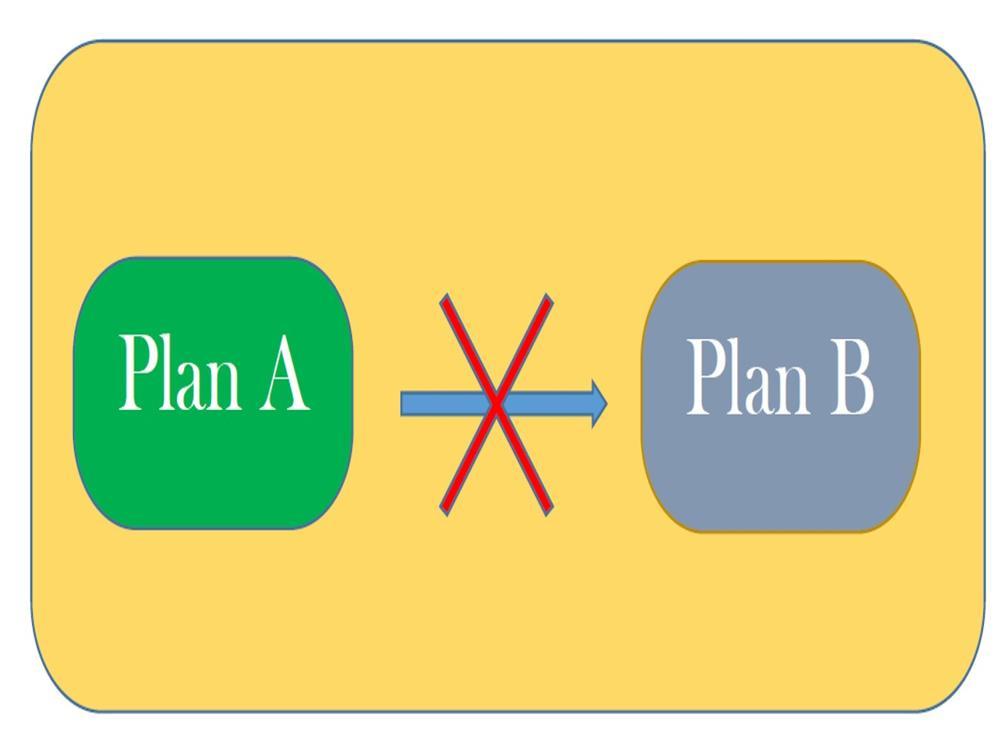
People making plans are often asked, “Is there a plan B?” For most people, it’s a must, and they might even go beyond plan B. Some even up to plan Z. But what is Plan B? What does Plan A do? I don’t remember where I heard that Plan B is only there in case something unexpected happens or something affects Plan A that is beyond our control.
From my perspective, we can make sure plan A works even for unforeseeable situations as well as for events that are beyond our control. While creating a plan, we can achieve this by avoiding variables that we cannot control, such as the time of day. I am not saying there is no time frame for work; I am just saying that by avoiding the effect of time frame on the plan, we can have a workable plan A.
Life is full of uncertainties, and no one can truly predict what situations may arise at any given moment. The future remains unforeseeable, and as much as we may wish for certainty, it rarely offers guarantees. In such a dynamic world, relying on a backup plan or “Plan B” often distracts us from fully committing to the primary goal. That’s why having a well-thought-out, deeply resilient Plan A is not just an option; it’s essential. It must be crafted with strength, adaptability, and foresight so that it can withstand the unpredictable challenges that life inevitably presents.
Rather than dividing energy between multiple fallback strategies, it’s wiser to pour our full focus and determination into making Plan A work. Build it with care, prepare for contingencies within it, and trust in its strength. After all, confidence grows not from having a safety net, but from knowing our first plan is capable, flexible, and deeply rooted in preparation. In the end, there is no Plan B because Plan A, if designed robustly, is all we’ll ever need.
Cheers!